Trip snapshot:
6 nights / 3 adults + 2 kids / Sydney to Hobart return / self-drive / busy but worth it
Quick verdict
Tasmania is one of those trips that looks small on a map but can very quickly become overpacked once you start adding Hobart, MONA, Bruny Island, Freycinet, Wineglass Bay, Launceston, lavender farms, wildlife parks and every scenic stop in between.
For our family, this was a 6-night Tasmania road trip from Sydney, flying into Hobart on Sunday 25 January 2026 and flying back to Sydney on Saturday 31 January 2026. We travelled as a group of five — three adults and two kids, because my mum was visiting from overseas and hired a Mazda CX-8 from Hobart for the full trip.
My honest verdict: 6 nights is enough to get a proper taste of Tasmania, but only if you accept one important rule:
You cannot do everything — and trying to do everything will make the trip less enjoyable.
This itinerary is for families who want a realistic Tasmania road trip with kids: a bit of city, a bit of coast, a bit of nature, a few memorable highlights, and enough breathing room that the adults do not spend the entire holiday repacking bags and telling everyone to hurry up.
It was not a slow holiday, though. We changed accommodation several times, which gave us great coverage of the island, but it also meant this was a high-movement itinerary. I would recommend it for families who are comfortable with road trips and packing up regularly — not for families wanting one easy base and full relaxation.
Who this itinerary is for
This itinerary is best for:
- Australian families travelling during school holidays or a short annual leave window
- Families flying in and out of Hobart
- Parents who want a road trip, but not an exhausting one
- Kids who can handle a few car days, but still need downtime
- Families who want nature, food, scenery and a few iconic Tasmania stops
- Travellers who prefer practical pacing over ticking every box
It is probably not ideal if you want to explore the full west coast, do long hikes, or travel very slowly. Tasmania rewards slow travel, and this itinerary is a compromise between seeing enough and not turning the trip into a logistics marathon.
How many annual leave days do you need?
Our actual travel dates were:
| Detail | Our trip |
|---|---|
| Outbound flight | Sydney to Hobart, Sunday 25 January 2026 |
| Return flight | Hobart to Sydney, Saturday 31 January 2026 |
| Total trip length | 6 nights / 7 days |
| Travellers | 3 adults and 2 kids |
| Checked bags | None booked initially — carry-on only |
| Hire car | Mazda CX-8 or similar from Hobart |
For a 6-night Tasmania trip, you can usually structure it around:
- 5 annual leave days if travelling across a normal work week
- 4 annual leave days if you can use a public holiday
- 0–2 annual leave days if you are travelling during school holidays and can use weekends cleverly
Because this trip started on a Sunday and ended on a Saturday, it worked well as a compact annual-leave style trip. The key is that you get seven calendar days of travel while only needing one working week off.
Our route at a glance
Our actual route:
Sydney → Hobart → Bruny Island → Hobart → Bicheno → Launceston → Newstead → Hobart → Sydney
Trip dates: 25–31 January 2026
Best for: families wanting a balanced first Tasmania trip
Trip style: self-drive road trip
Pace: moderate to busy
Kid energy rating: medium
Parent logistics rating: high, mainly because of the driving and accommodation changes
Our confirmed accommodation sequence was:
| Date | Location | Accommodation | Cost noted |
| 25–26 Jan | Hobart | Argyle Accommodation | AUD 239.45 |
| 26–27 Jan | Simpsons Bay, Bruny Island | The Stone Cottage – Bruny Island | AUD 277.99 |
| 27–28 Jan | Hobart / Mornington | Discovery Parks – Mornington Hobart | AUD 187.00 |
| 28–29 Jan | Bicheno | Bicheno by the Bay | AUD 365.88 |
| 29–30 Jan | Launceston | Coach House Launceston | AUD 163.00 |
| 30–31 Jan | Newstead | Renovated Homely Home | AUD 232.25 |
| Accommodation total | AUD 1,465.57 |
The first night was at Argyle Accommodation in Hobart, which worked as a practical arrival-night base before heading to Bruny Island the next day.
Where to base yourself
For 6 nights, the simplest family structure would usually be 3 nights Hobart, 2 nights East Coast and 1 night Launceston.
Our actual trip was more mobile than that. We moved through Hobart, Bruny Island, Bicheno, Launceston and Newstead across the week. That gave us a lot of variety, but it also meant more packing, unpacking and car logistics.
A more relaxed version of this trip would be:
| Base | Nights | Why |
| Hobart | 2–3 nights | Easy arrival, MONA, food, waterfront, Bruny day trip option |
| East Coast / Bicheno / Coles Bay | 2 nights | Freycinet, beaches, scenic driving, slower coastal feel |
| Launceston / Newstead | 1 night | Cataract Gorge, northern Tasmania stop, final leg |
Our version worked because we had a car for the whole trip and were comfortable with changing accommodation. But if I were advising another family, I would say this clearly: do not underestimate the effort of one-night stays with kids.
Day-by-day itinerary
Day 1 — Fly from Sydney to Hobart and collect the car
We flew from Sydney to Hobart with Jetstar on Sunday 25 January 2026. The flight was scheduled for 11:45am, arriving in Hobart at 1:35pm, with a flight time of around 1 hour 50 minutes.
We booked the starter fare and initially had 7kg carry-on luggage each with no checked baggage. For a family road trip, this is doable only if you pack carefully — but Tasmania weather can be changeable, so I would think seriously before trying to be too heroic with luggage.
After arriving, the priority was simple:
- collect the hire car
- get everyone fed
- do a supermarket stop
- settle into Argyle Accommodation in Hobart
- avoid turning arrival day into a sightseeing race
Argyle Accommodation was not the “destination” part of the trip, but it did the job for the first night. For this kind of itinerary, that is enough. Sometimes the first night just needs to be clean, practical and positioned well enough for the next day.
Parent note: The supermarket stop is boring but essential. Tasmania road trips are much easier when the car has snacks, water, wipes, layers and emergency bakery items.
Day 2 — Hobart, MONA by ferry, then Bruny Island
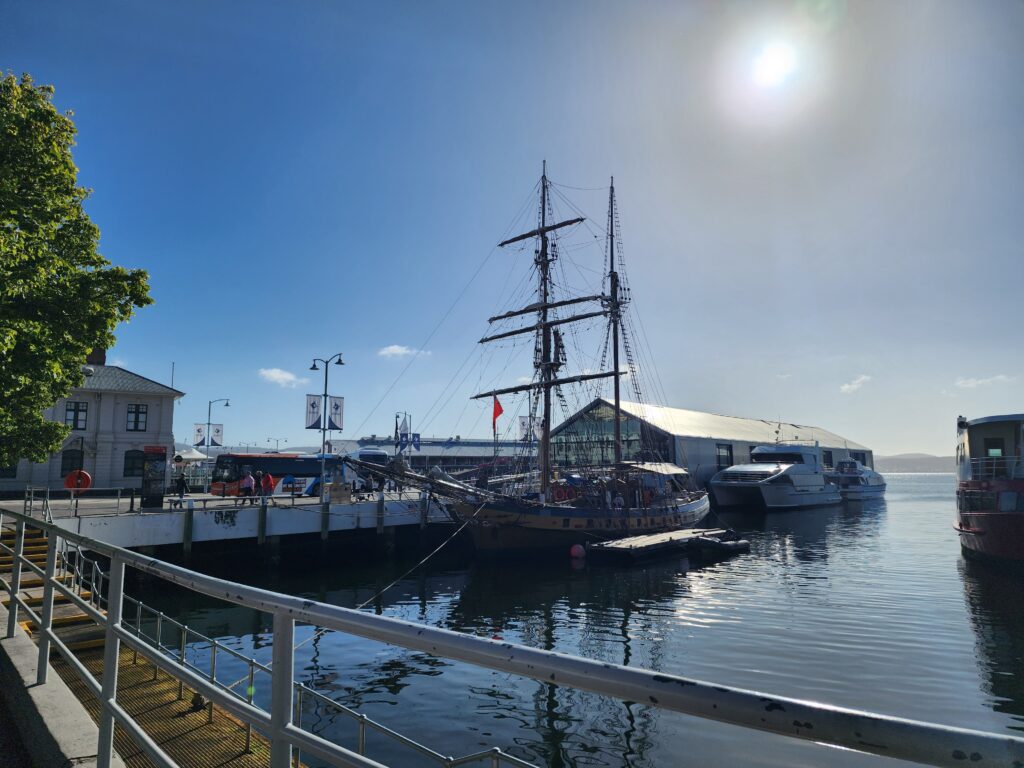
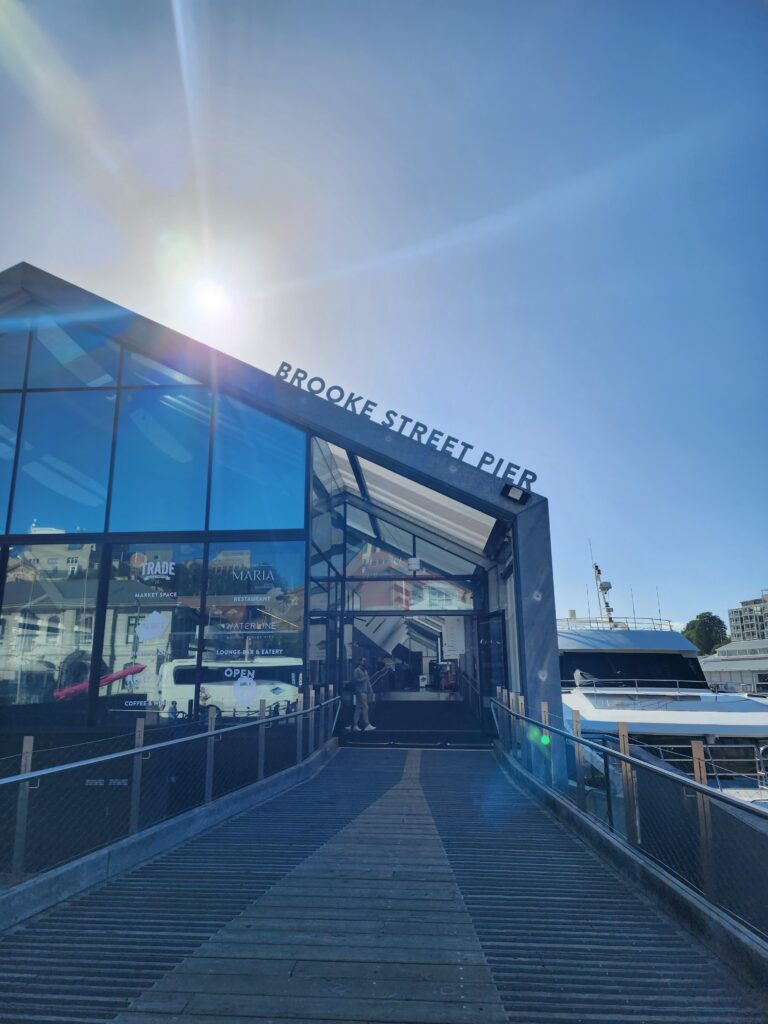
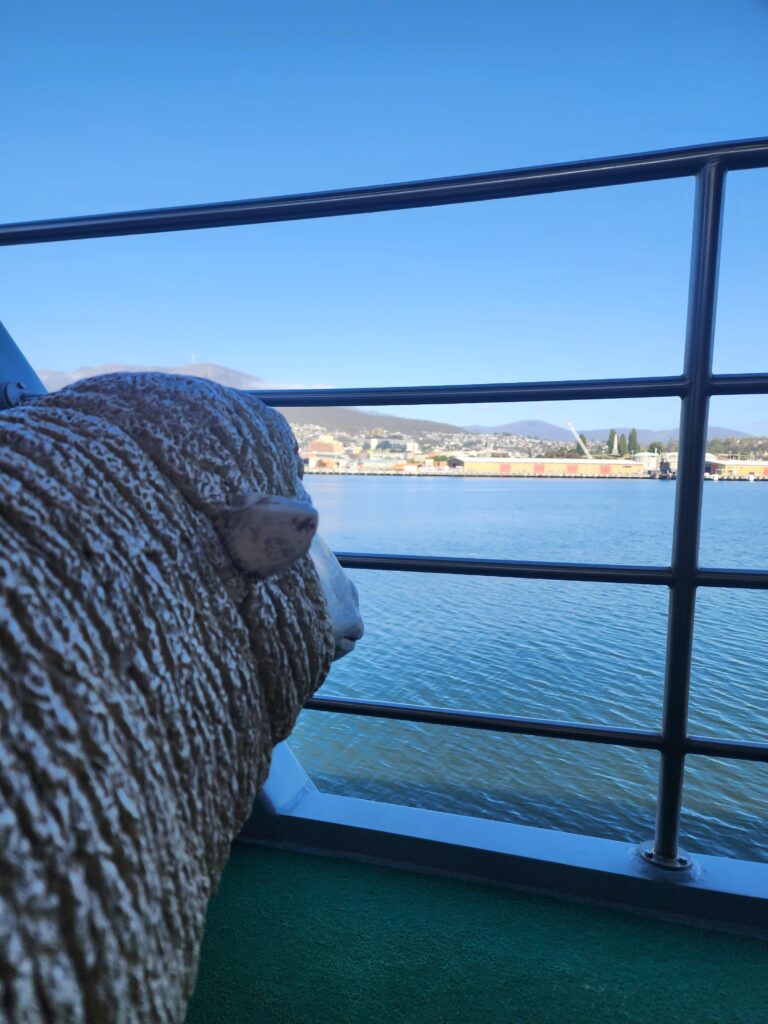
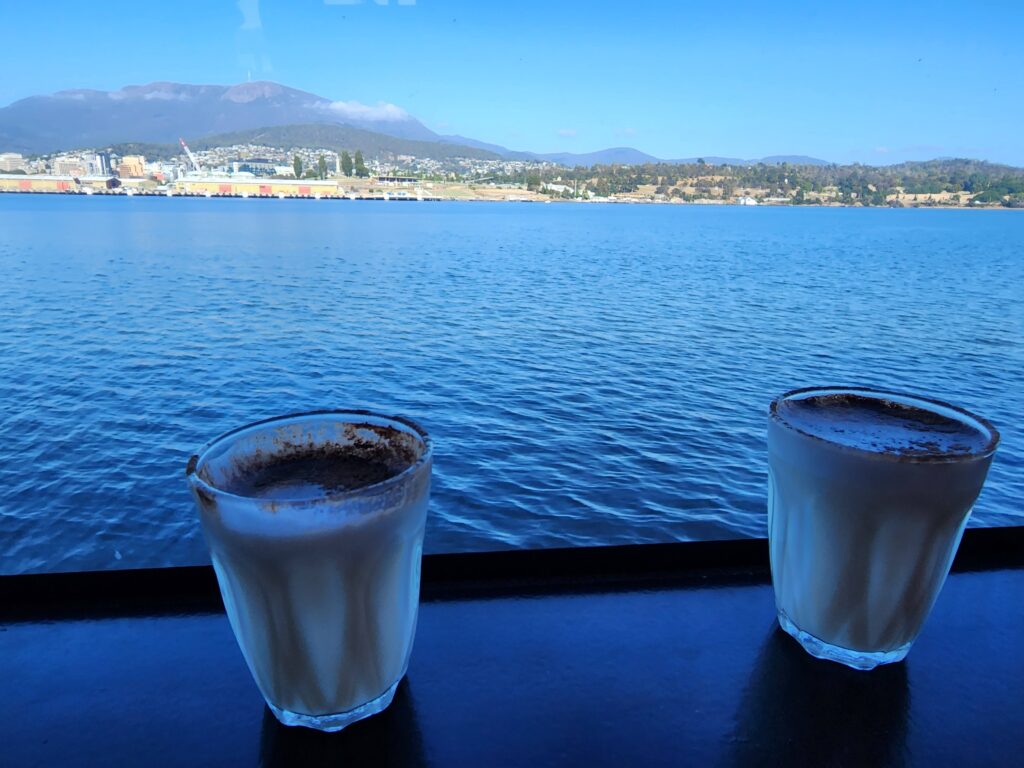
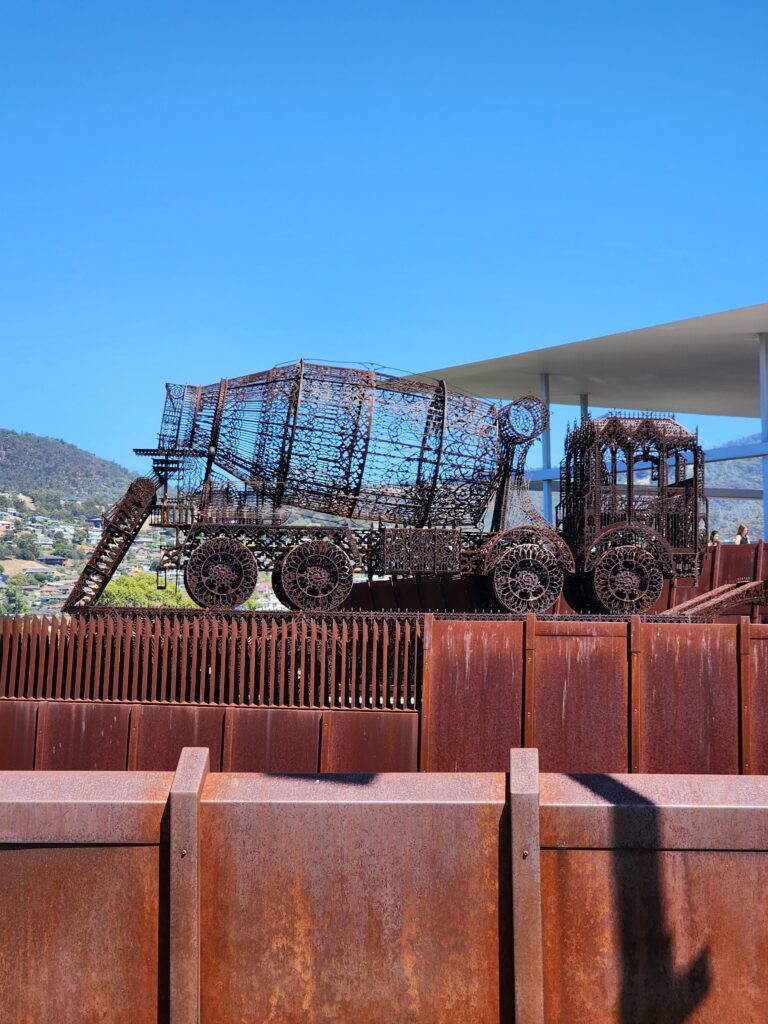
We did MONA with the ferry, which made the experience feel like more than just a museum visit. The ferry ride itself was a nice part of the day and gave the kids a sense of adventure before we even arrived.
My honest take: MONA is memorable, but not essential if you are trying to save money. If your budget is tight, I would not say this is the one thing every family must do in Tasmania. It is more of a “nice if it fits your budget and interests” experience.
With kids, I would also be a little cautious. Some parts were confronting for a younger child. Our 5-year-old found a few sections scary at times, particularly where there were body-like sculptures and disturbing images. That does not mean families should avoid MONA completely, but I would go in prepared and be ready to move through sections quickly.
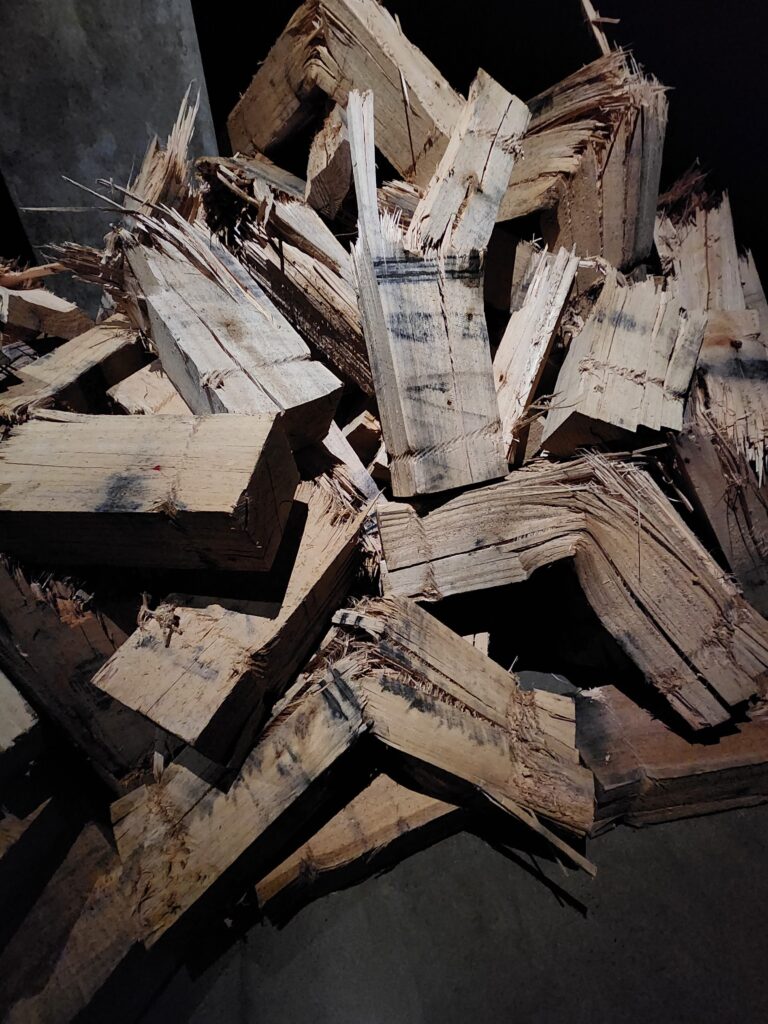
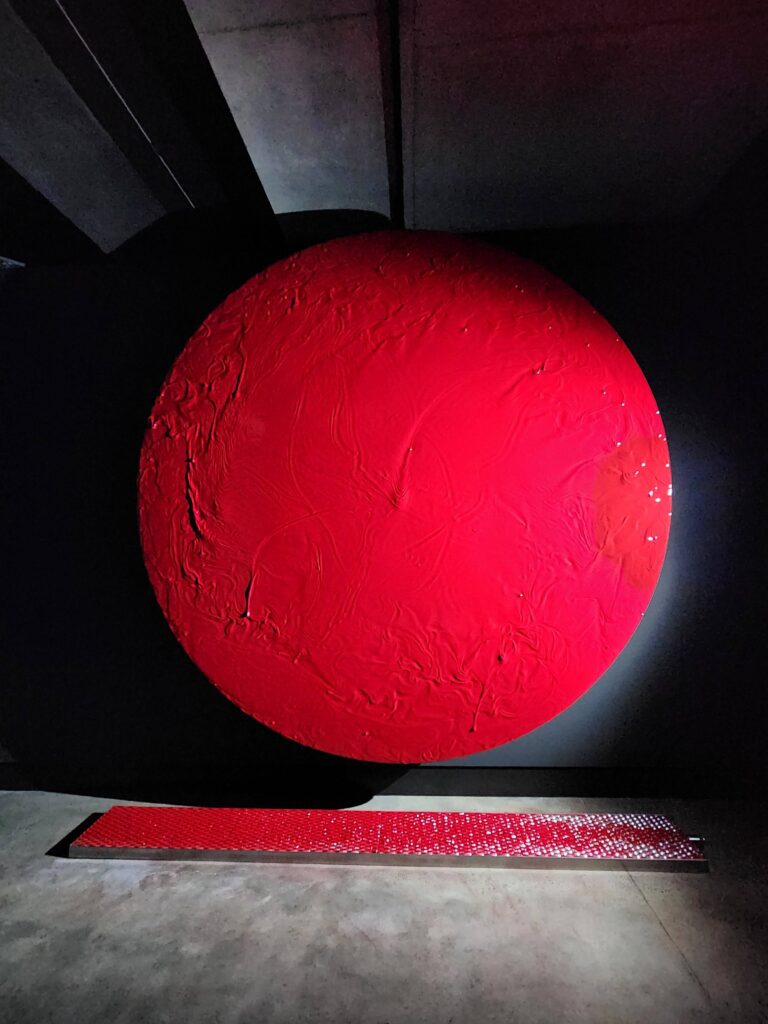
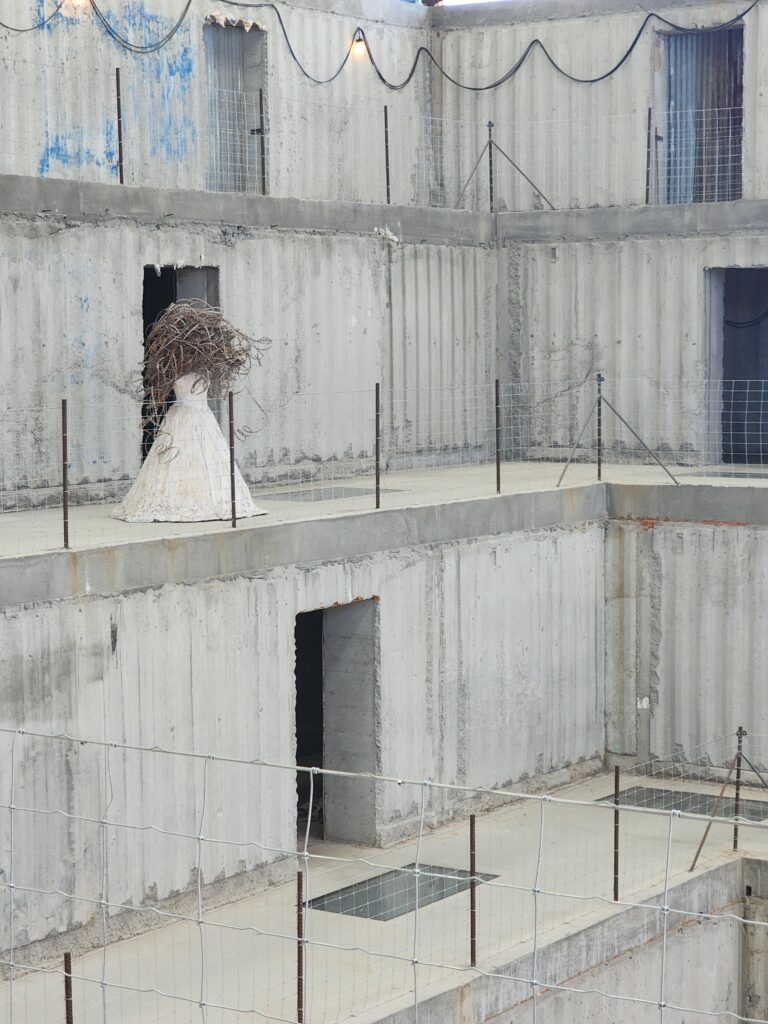
A realistic MONA plan with kids:
- take the ferry if the budget allows
- treat it as a half-day experience, not a full-day museum marathon
- do not expect kids to engage with everything
- be prepared for some confronting or adult-feeling artworks
- leave before everyone is exhausted
After Hobart and MONA, we headed towards Bruny Island for our overnight stay.
Day 3 — Bruny Island overnight: berries, bush, games and unsuccessful penguin watching
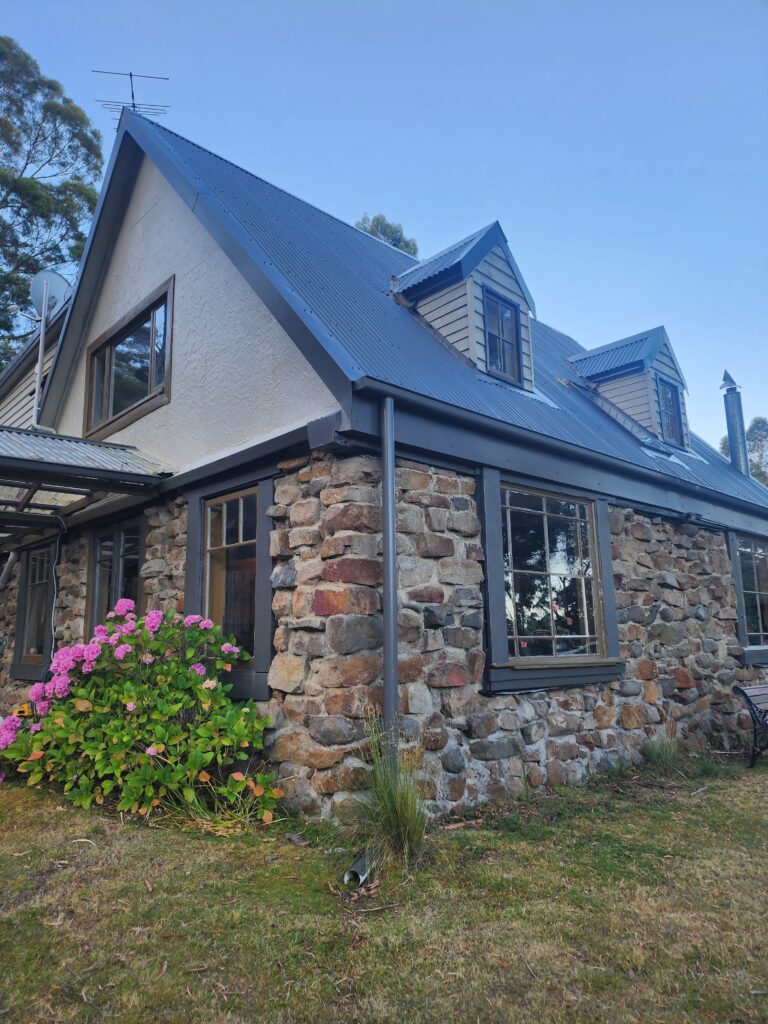
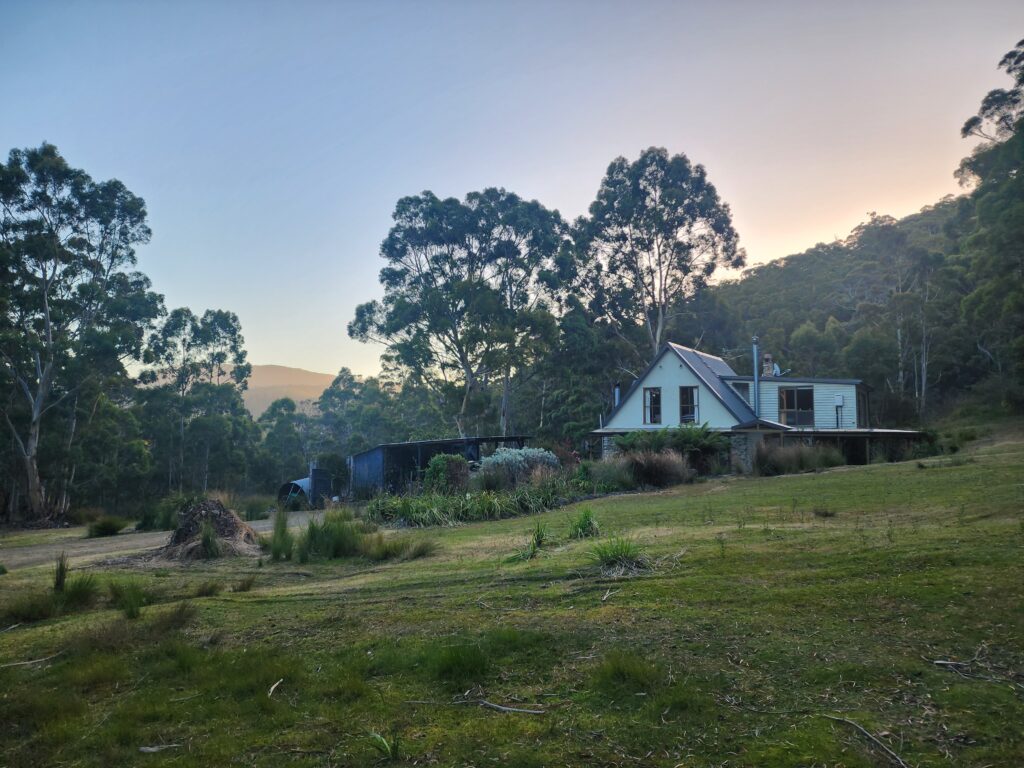
Instead of doing Bruny Island as a day trip from Hobart, we stayed overnight at The Stone Cottage – Bruny Island in Simpsons Bay from 26–27 January.
This accommodation was one of the best parts of the trip. It was in the middle of the bush, full of native life, with kangaroos around, a fireplace, games, a trampoline and a really cosy family feel. It felt like the kind of place where the accommodation itself becomes part of the travel memory, not just somewhere to sleep.
Nearby, there were trust-system fridges stocked with fresh sourdough bread and other local items, which added to that lovely Bruny Island feeling. The accommodation also had torches with red sheets for penguin watching, which was a thoughtful touch.
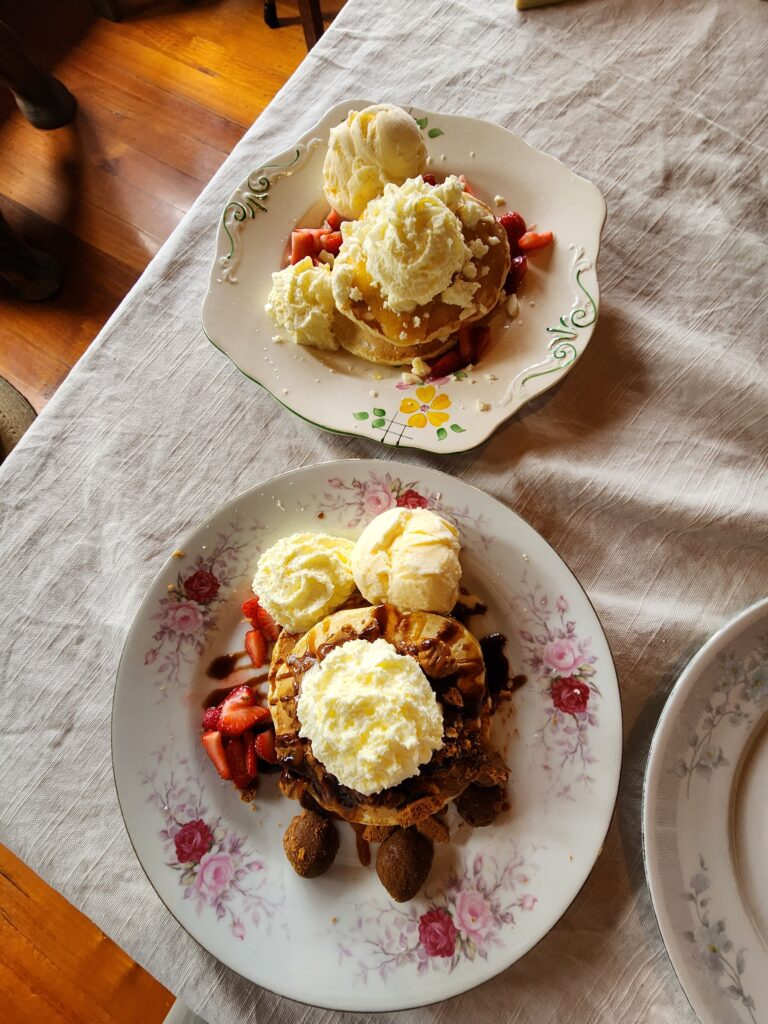
We visited a berry farm on Bruny Island and had amazing berry pancakes — very worth adding to a family itinerary if you enjoy food stops.
We also waited a long time to see penguins, without success. That sounds like a failure, but it still felt worth the experience. The important lesson: penguins may not come out until quite late, and with young kids that can become a waiting game. If you try it, bring warm clothes, patience and realistic expectations.
My honest take: Staying overnight on Bruny was much better than rushing it as a day trip. But it does add another accommodation move, so it suits families who are comfortable travelling light and packing up regularly.
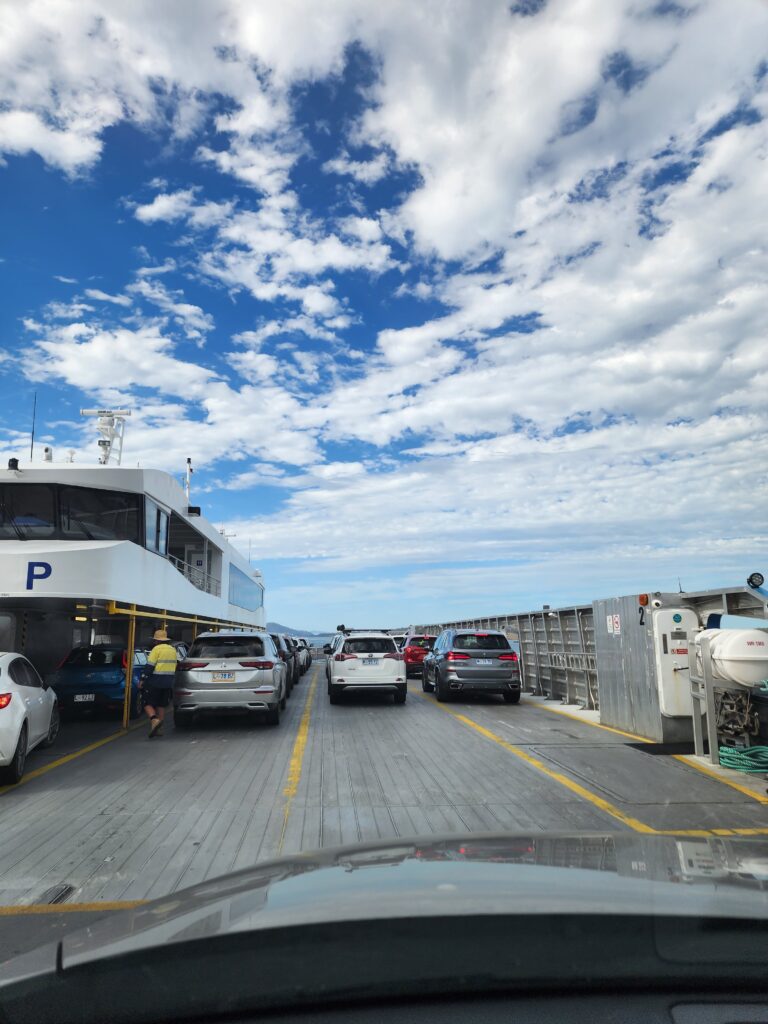
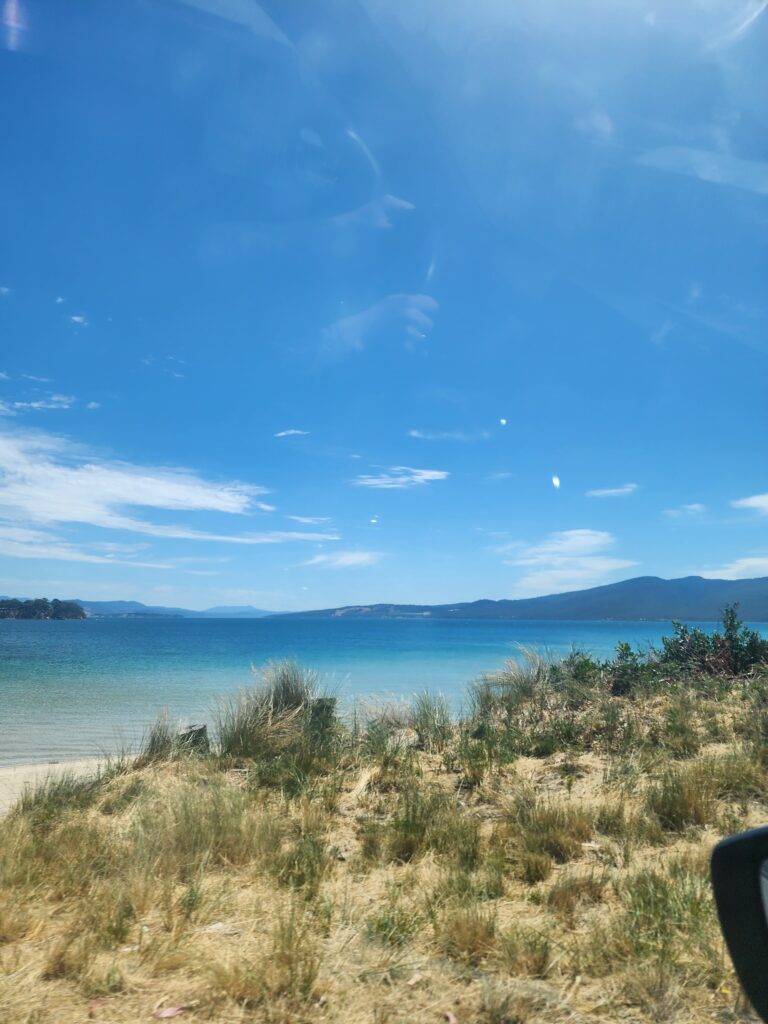
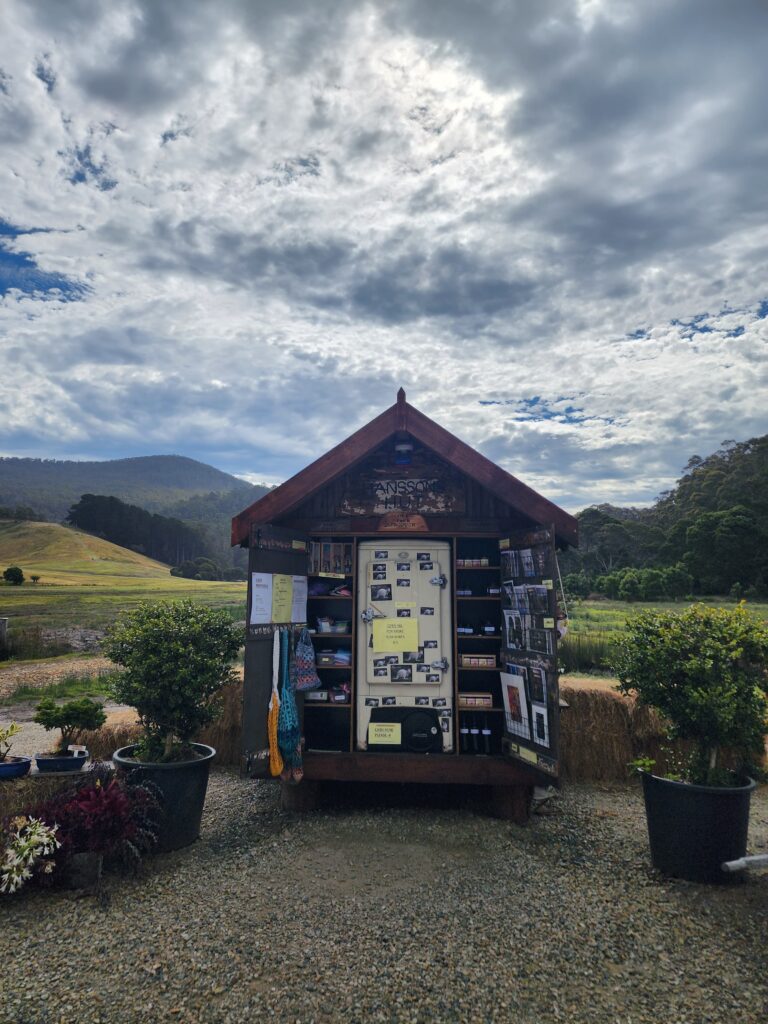
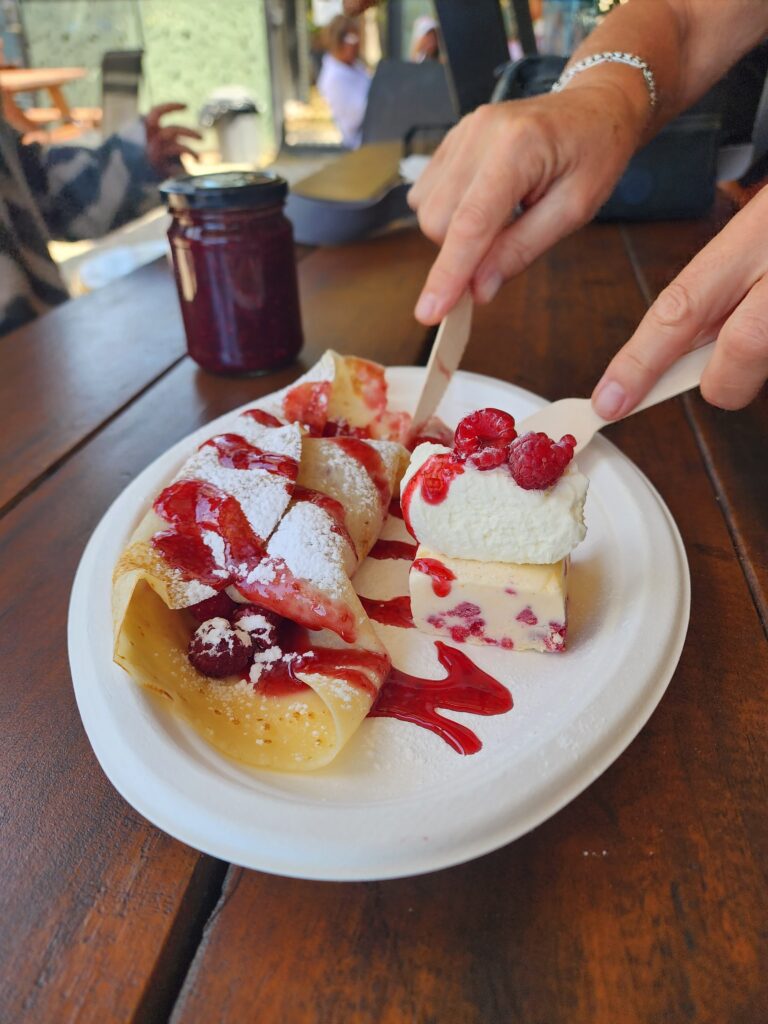
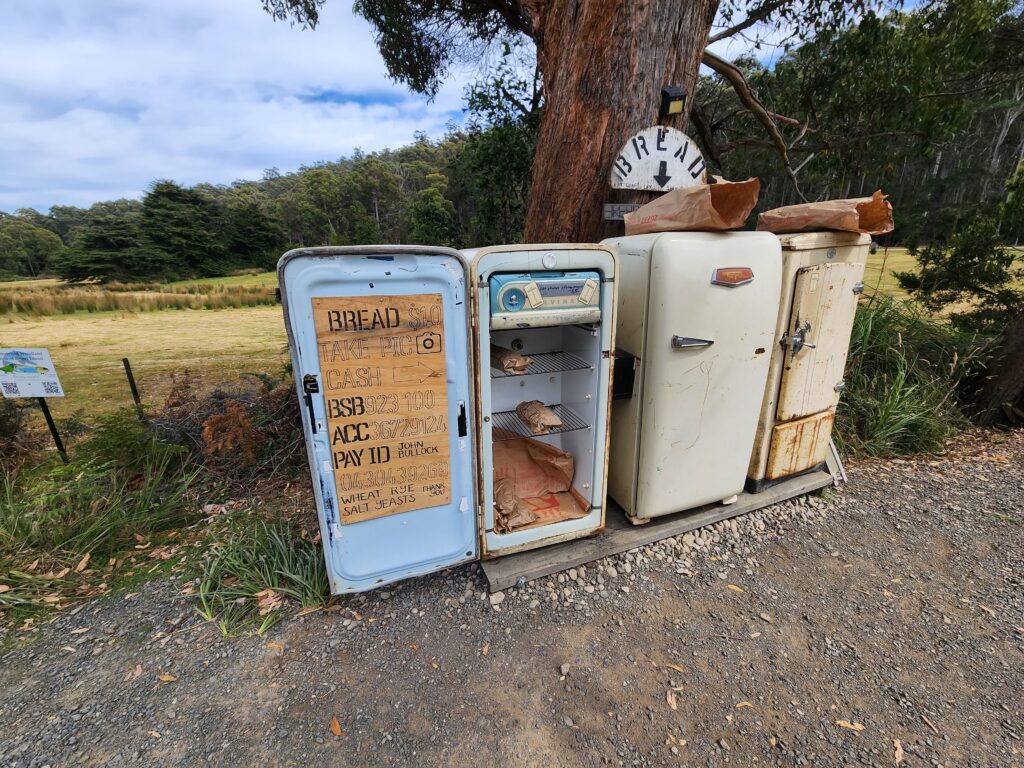
Day 4 — Hobart / Mornington reset before the East Coast
After Bruny Island, we stayed at Discovery Parks – Mornington Hobart from 27–28 January.
This worked as a practical reset point before heading towards the East Coast. For families, this kind of stop matters. Not every night has to be dreamy or scenic — sometimes the right accommodation is simply the one that makes the next day easier.
This was the point in the trip where I would recommend checking:
- laundry situation
- snacks and groceries
- fuel
- weather for Freycinet
- whether everyone has enough energy for the next road trip section
Day 5 — Drive to Bicheno and the East Coast
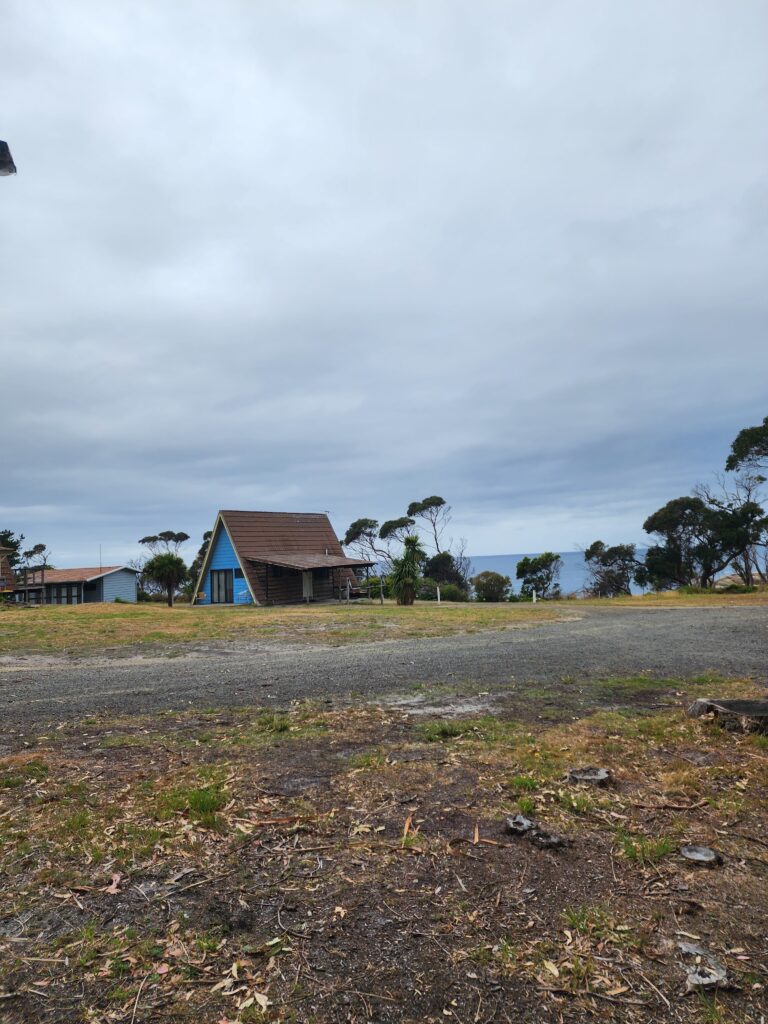
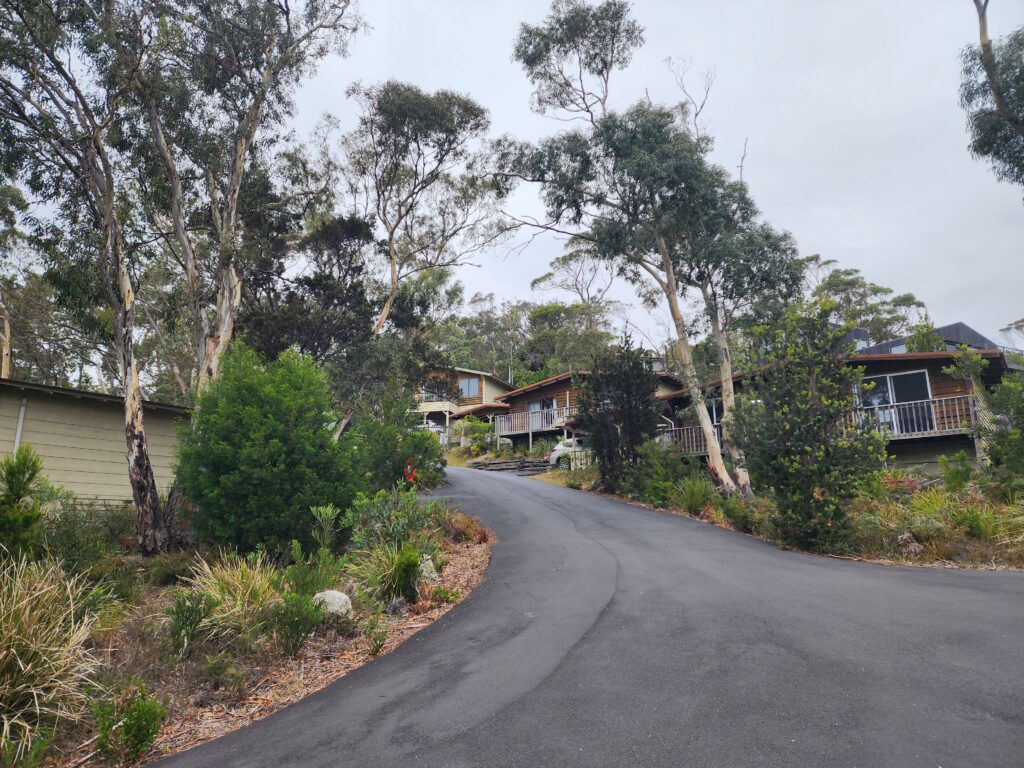
We stayed at Bicheno by the Bay from 28–29 January.
Bicheno works well as an East Coast base because it gives access to coastal scenery and puts you within reach of Freycinet and the Wineglass Bay area. The drive itself is part of the trip, but with kids it is important to build in stops and avoid treating the day like a transfer only.
The accommodation had a special local surprise: penguins were nesting under the cottages. This gave Bicheno a different kind of magic after our unsuccessful penguin-watching attempt on Bruny Island. It is exactly the kind of experience that makes Tasmania feel wild and memorable for kids.
Of course, we also went to The Lobster Shack in Bicheno. This was also the scene of one of those parenting travel moments you remember forever: while we were trying to find a good table, we momentarily lost our 5-year-old. Cue panic. He had gone back upstairs to the car park, where my husband was finishing a phone call in the car. It ended fine, but it was a very real reminder that busy food stops, split attention and kids can turn chaotic in about ten seconds.
Depending on your route and timing, possible stops include:
- coastal viewpoints
- small towns
- beaches
- lunch stop
- short walks
Aim to arrive with enough daylight left to enjoy the area. If you arrive too late, the day becomes all driving and no reward.
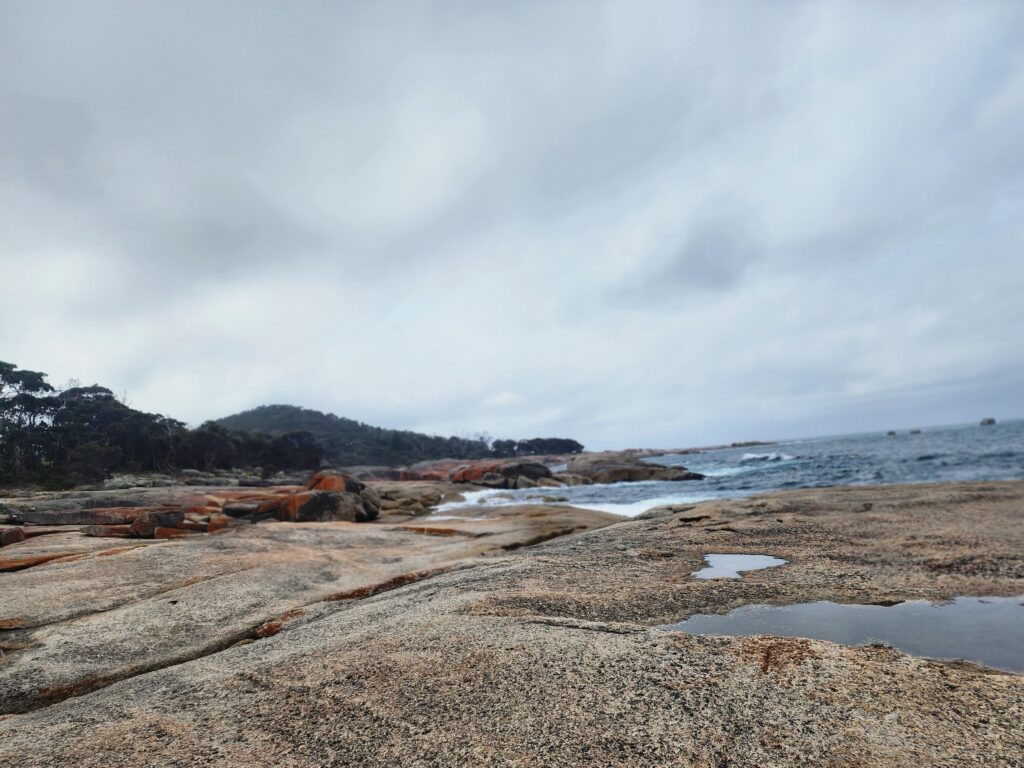
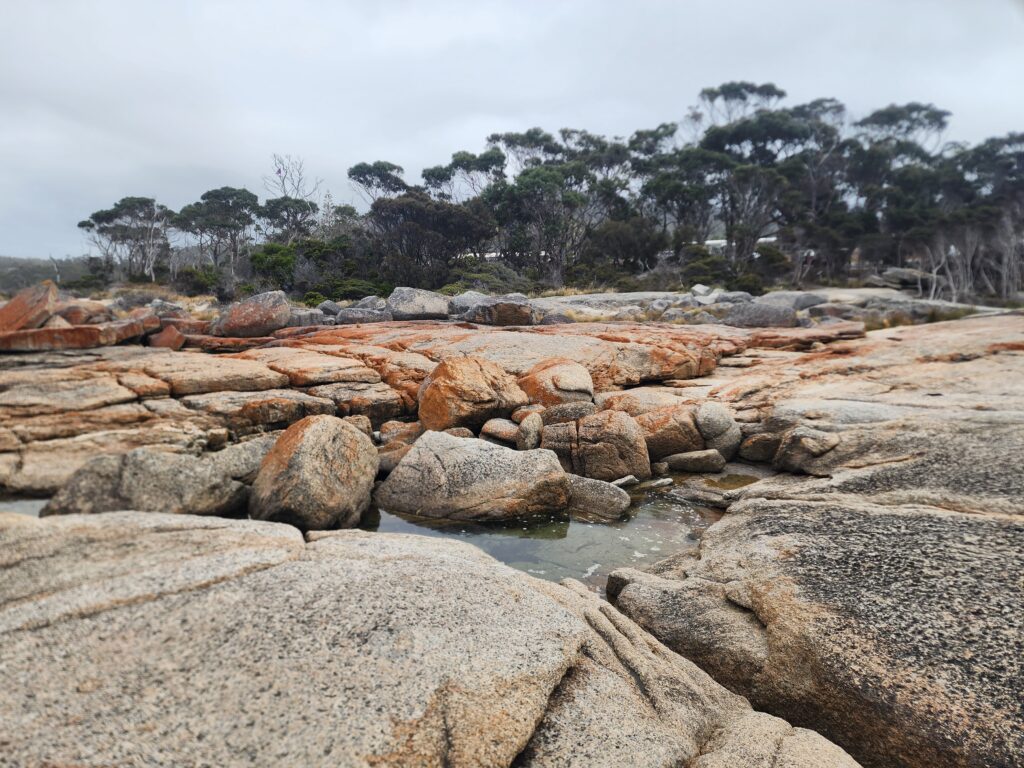
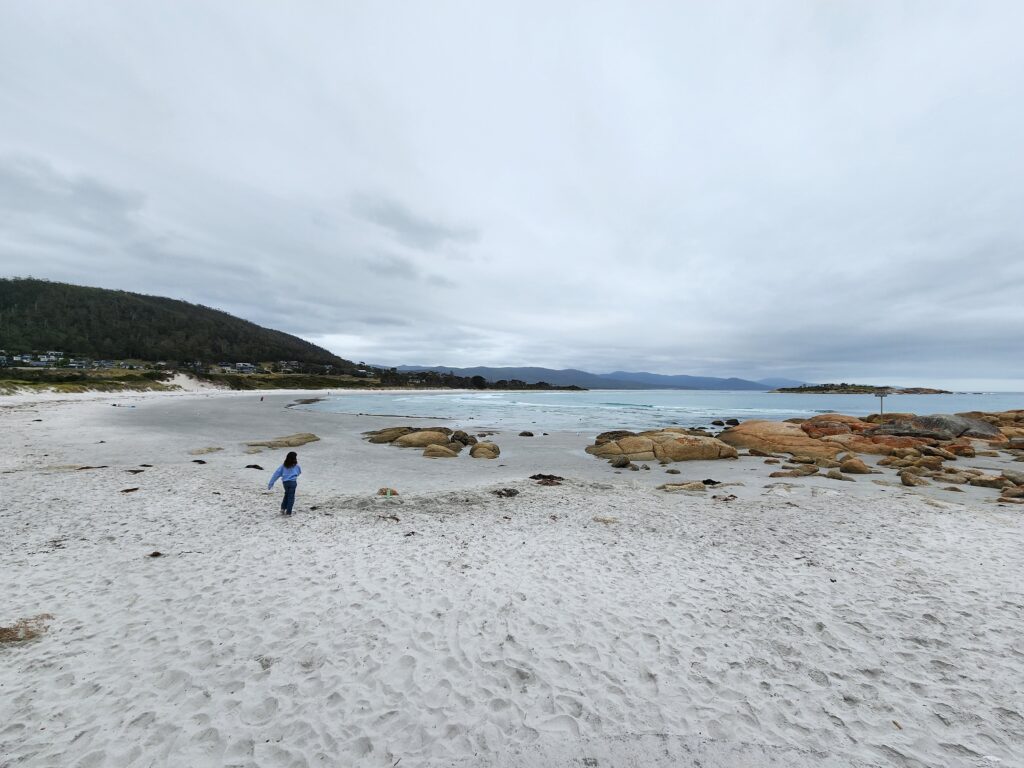
Day 5 — Freycinet and Wineglass Bay area
This is one of the highlights of the itinerary.
Freycinet is stunning, but families need to be realistic about walks. Not every child wants a long scenic hike just because the adults saw a beautiful photo online.
The signature walk in this area is the Wineglass Bay Lookout walk — around 1.5 hours return, about 2.6 km, with 300+ steps and those iconic panoramic views over the bay. It is the classic “must-do” Freycinet walk if your family has the energy and everyone is up for the stairs.
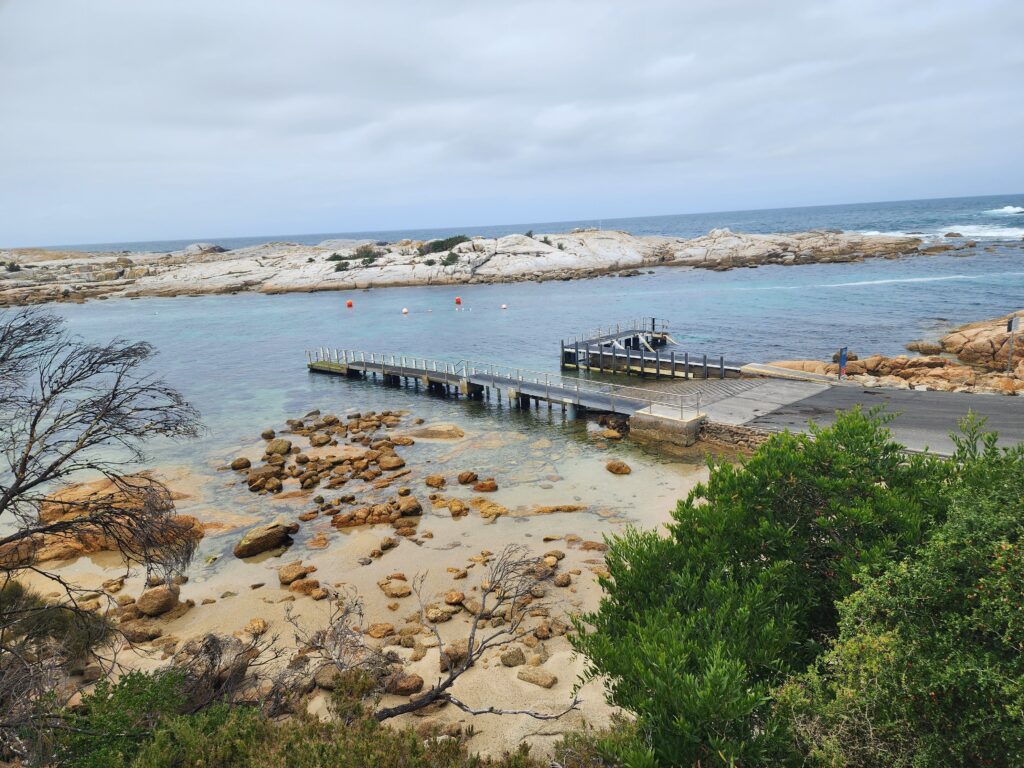
We did not do the full Wineglass Bay Lookout walk. We stopped at the smaller, lower Coles Bay lookout, which sits earlier on the same busy trail towards Wineglass Bay. It is less impressive than the main Wineglass Bay Lookout, but it was a more manageable option for our family at the time.
A few honest notes:
- the main Wineglass Bay Lookout is the better view if you can manage it
- Coles Bay lookout is the easier/lower compromise
- the car park was expensive
- there were lots of mozzies
- even the smaller lookout still gave us a sense of being in Freycinet
- this was a better fit for us than forcing the bigger walk just to tick the famous box
A good family version of the day could include:
- Freycinet National Park / Coles Bay area
- a manageable lookout walk rather than automatically choosing the biggest one
- beach time if weather allows
- scenic drive
- simple dinner afterwards
If your kids are active and used to walking, you may do more. If not, keep it simple. The point is to enjoy Freycinet, not create a forced-march memory.
What I would not do: I would not combine a rushed Freycinet day with a long onward drive unless absolutely necessary. That is how everyone ends up tired and cranky.
Day 6 — Bicheno to Launceston via Mount Elephant Pancake Shack
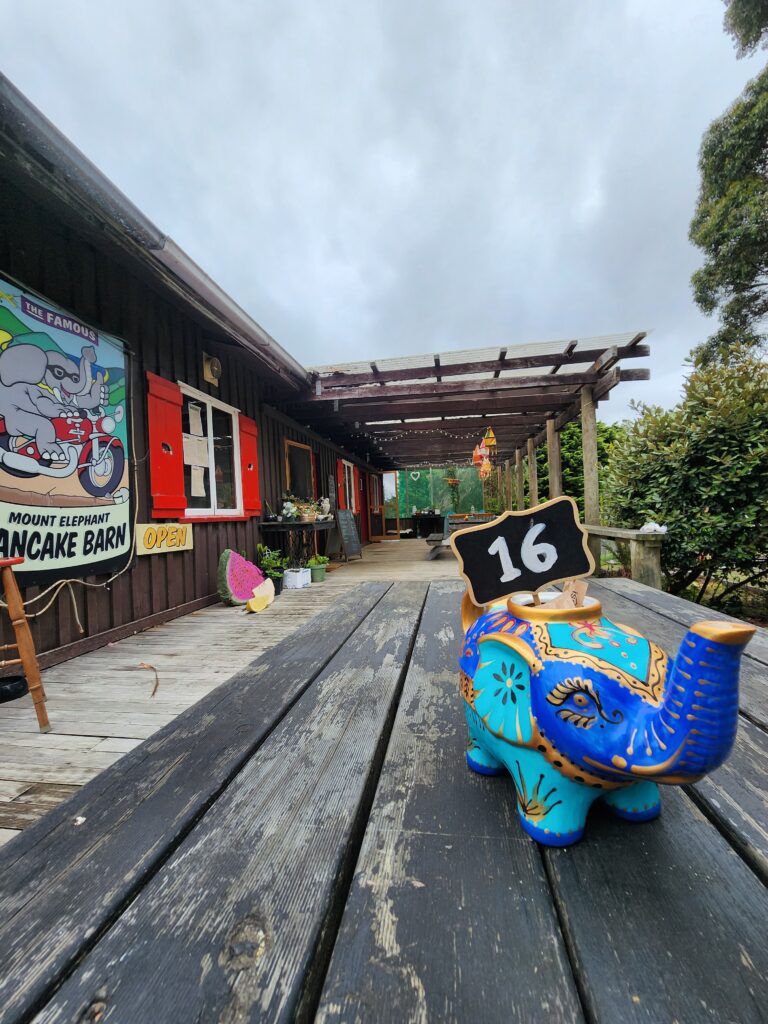
After Bicheno, we drove towards Launceston, stopping at Mount Elephant Pancake Shack on the way. It had new owners when we visited, and it was a lovely place — the kind of simple road-trip food stop that makes the day feel more relaxed and less like a list of attractions.
We arrived in Launceston around dinner time and had Lebanese food that was, honestly, unimpressive. My recommendation from that experience would be: stick with pubs or casual restaurants with strong reviews, especially when everyone is tired after a drive. Tasmania has great food, but a tired-family dinner is not the moment to gamble.
We stayed at Coach House Launceston from 29–30 January.
Day 7 — Cataract Gorge, brewery, music festival, lavender farm and Newstead
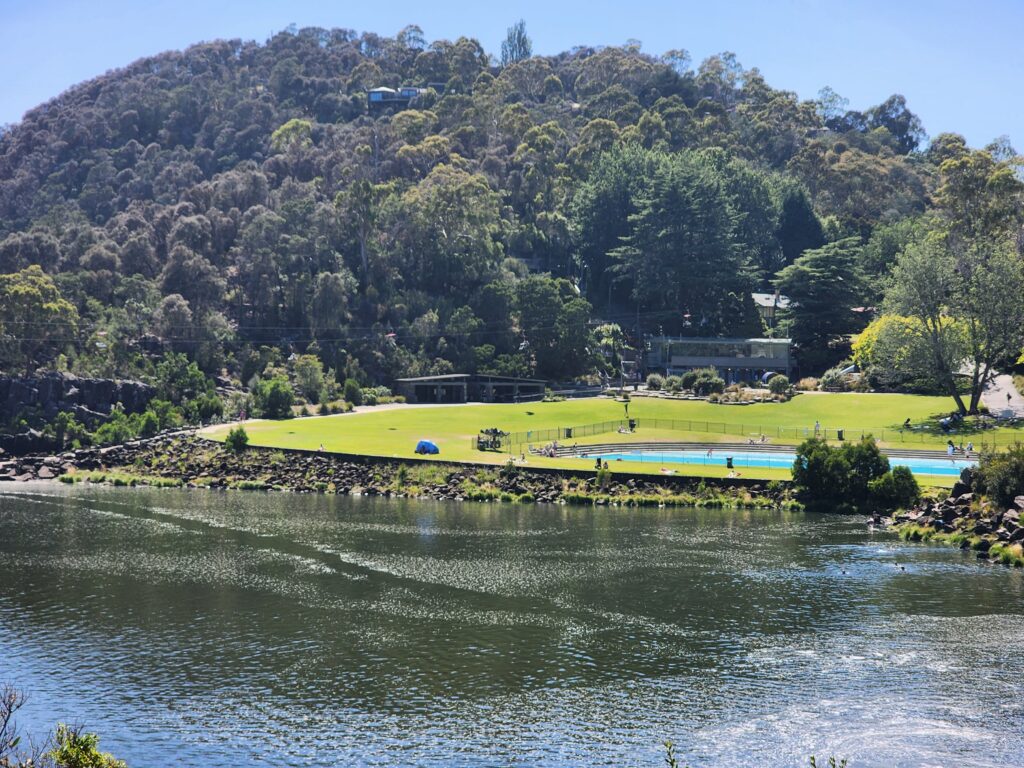
The next morning, we visited Cataract Gorge, which worked really well as our first proper Launceston activity. It gave the kids space to move after the previous day’s drive and gave the adults an easy nature stop without needing a complicated plan.
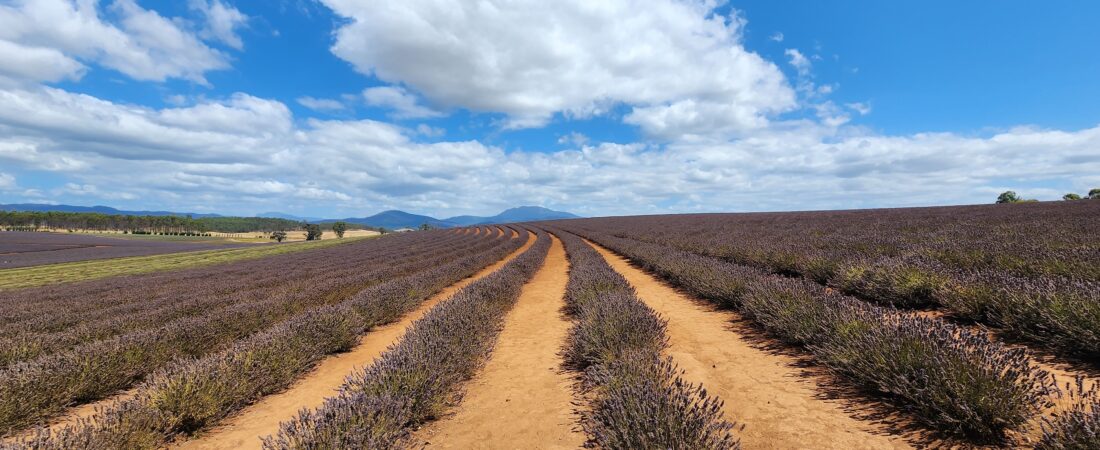
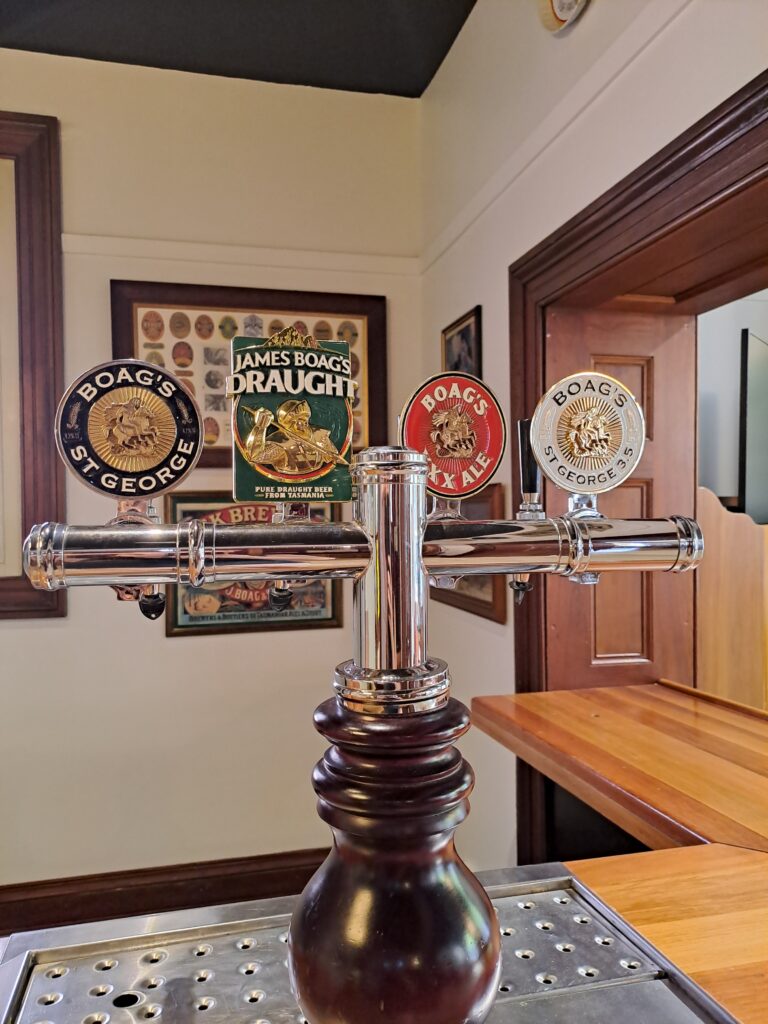
After that, we headed to a brewery. Then we split up for part of the day: my husband went to a music festival and got his music fix, while we went to Bridestowe Lavender Estate and back.
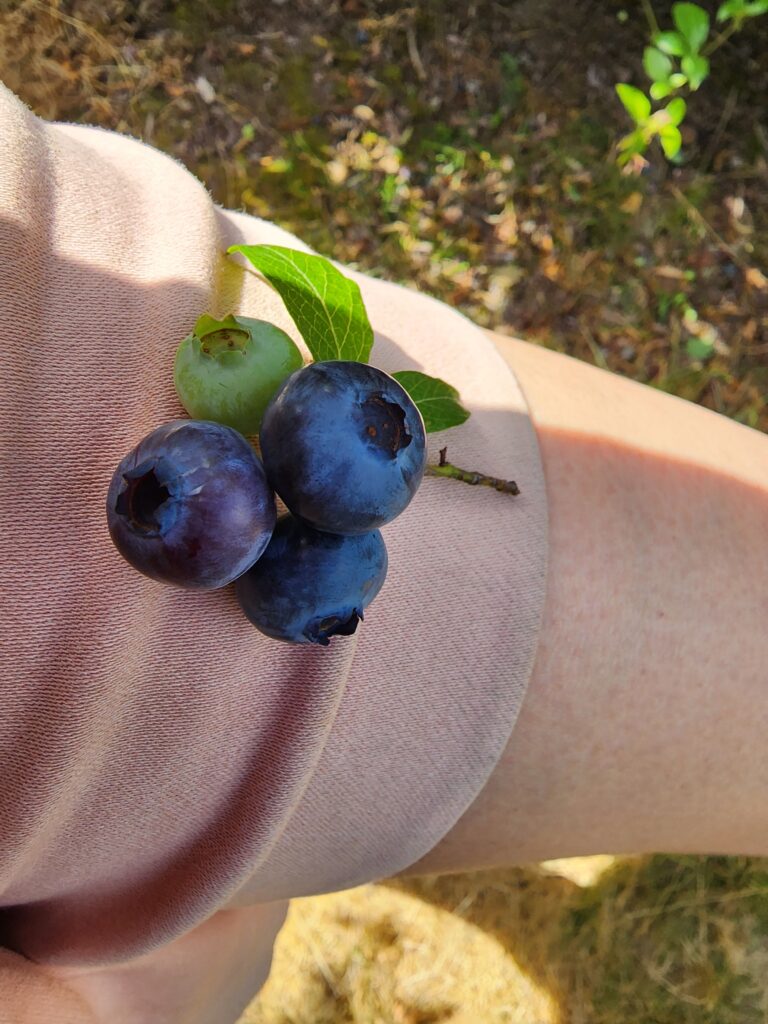
On the way back from the lavender farm, we found a pick-your-own berry farm, which was a must-do style stop for us. These are the kinds of simple, unexpected family travel moments that can end up being more memorable than the big-ticket attractions.
That night, we headed to our accommodation in Newstead, staying at Renovated Homely Home from 30–31 January.
This day is a good example of why I like realistic itineraries: not everyone in the family has to do every activity together. Sometimes the best day is the one where the music person gets music, the kids get berries and space to run, and everyone meets back at the accommodation without forcing a perfect family schedule.
Final day — Early start, inland scenic route back to Hobart and late flight home
The next day, we left early and took an inland scenic route back to Hobart for our late afternoon/evening flight.
This was more rugged and scenic than taking the most direct route, and it made the final day feel like part of the trip rather than just a transfer. Was it rushed? Yes, a little. Was it still worth it? Also yes.
This is one of the trade-offs of a 6-night Tasmania itinerary. If you want variety, scenic roads, Bruny Island, the East Coast and Launceston, some parts will feel tight. But the scenic route back gave the trip a memorable final texture.
We flew from Hobart to Sydney on Saturday 31 January 2026. The return flight was scheduled for 7:35pm, arriving in Sydney at 9:25pm.
Tip: A late Hobart flight gives you more travel time on the final day, but it can also mean tired kids arriving home close to bedtime. Worth it if you need the extra day — but do not pretend it will feel relaxing.
What I would book early
For a short Tasmania trip, I would book these early:
- flights
- car hire
- Hobart accommodation
- Bruny Island accommodation if staying overnight
- East Coast accommodation, especially Bicheno / Coles Bay
- MONA tickets / ferry if needed
- Bruny Island ferry timing
- any special tours or wildlife experiences
Our major pre-booked costs included:
| Item | Cost noted |
| Mazda CX-8 or similar hire car, 25–31 Jan | AUD 995.18 |
| Argyle Accommodation, Hobart | AUD 239.45 |
| The Stone Cottage – Bruny Island | AUD 277.99 |
| Discovery Parks – Mornington Hobart | AUD 187.00 |
| Bicheno by the Bay | AUD 365.88 |
| Coach House Launceston | AUD 163.00 |
| Renovated Homely Home, Newstead | AUD 232.25 |
| Accommodation total | AUD 1,465.57 |
| Car hire + accommodation subtotal | AUD 2,460.75 |
Tasmania can book out quickly during school holidays, especially in popular coastal areas. The accommodation choice can shape the whole trip.
What worked well
- Splitting the trip across Hobart, Bruny Island, the East Coast and Launceston gave us a lot of variety in a short time.
- Staying overnight on Bruny Island was worth it. The accommodation was a highlight, not just a place to sleep.
- The berry farm on Bruny Island was a great family food stop, especially the berry pancakes.
- Bicheno had a real wildlife feel, especially with penguins nesting under the cottages.
- Cataract Gorge worked well on our first Launceston morning, rather than trying to squeeze it into the departure day.
- The lavender farm, Mount Elephant Pancake Shack, Launceston brewery, pick-your-own berry farm and music festival gave the trip small memorable layers beyond just sightseeing.
- The Lobster Shack in Bicheno was worth including, though it also gave us one of those brief but terrifying “where is the child?” travel moments.
- Taking the scenic route back to Hobart was rushed, but it gave us a rugged Tasmania experience and felt worth it.
What I would change next time
This was a rewarding itinerary, but it was not the slowest version of Tasmania.
What I would think about changing:
- Add one extra night if possible, especially around Bicheno or the East Coast.
- Be realistic about penguin watching with young kids. They may come out very late, and you may still not see them.
- Treat MONA as optional rather than essential for families. The ferry was lovely, but the museum itself may not suit every child.
- Avoid pretending the final inland scenic drive back to Hobart is a relaxed day. It is worth doing, but it can feel rushed.
- In Launceston, I would choose pubs or casual restaurants with strong reviews over taking a gamble when everyone is tired from driving.
- Consider whether one-night stays suit your family. They help you cover more ground, but they increase packing and logistics.
Suggested 6-night itinerary summary
| Day | Date | Base | Plan |
| 1 | Sun 25 Jan | Hobart | Fly Sydney to Hobart, collect car, stay at Argyle Accommodation |
| 2 | Mon 26 Jan | Bruny Island | MONA by ferry, then Bruny Island overnight at Simpsons Bay |
| 3 | Tue 27 Jan | Hobart / Mornington | Return from Bruny, practical Hobart reset |
| 4 | Wed 28 Jan | Bicheno | Drive to East Coast, stay at Bicheno by the Bay |
| 5 | Thu 29 Jan | Launceston | Freycinet / East Coast section, Mount Elephant Pancake Shack, arrive Launceston for dinner |
| 6 | Fri 30 Jan | Newstead | Cataract Gorge, brewery, music festival split, lavender farm, pick-your-own berry farm, Newstead |
| 7 | Sat 31 Jan | Home | Early start, inland scenic route back to Hobart, evening flight to Sydney |
Is 6 nights enough for Tasmania with kids?
Yes — but only for a first-taste itinerary.
Six nights is enough for Hobart, one major East Coast section and Launceston. It is not enough for the full island, and that is okay.
The mistake would be trying to add Cradle Mountain, the west coast, Port Arthur, Freycinet, Bruny, Launceston and Hobart all into one short trip. On a map, Tasmania looks compact. In real family travel, every move still takes time and energy.
For most Australian families with limited annual leave, I would rather do a realistic 6-night itinerary well than a rushed 10-stop itinerary badly.
Final thoughts
Tasmania is a great annual-leave adventure because it feels different from mainland Australia without requiring an international trip. You get scenery, food, wildlife, art, coastlines and road trip energy — all within a short flight from many Australian cities.
For families, the key is not to overbuild the itinerary. Choose a few strong anchors, give yourself enough time between them, and accept that Tasmania is the kind of place you may want to return to.
This 6-night route gives you a strong first trip without needing to burn through all your leave.